Are Peptides Safe?
What Are Peptides?
Peptides are short chains of amino acids—the same building blocks that make up proteins in the body. They act as signaling molecules, helping regulate important functions like metabolism, healing, inflammation, hormone production, and tissue repair.
Are Peptides Safe?
Peptide therapy can be safe when prescribed and monitored appropriately, but not all peptides—or sources—are equal. Key things to consider:
Should be prescribed by a licensed provider who understands dose, indications, and risks
Not everyone is a candidate—your health history, medications, and goals matter
Some peptides are well-studied, while others still lack robust clinical evidence
Use only medications from reputable, regulated compounding pharmacies
"Research peptides” available online have not gone through the safety, quality, and effectiveness standards. They are labeled for research purposes only, are NOT APPROVED FOR HUMAN USE, and should not be used as a treatment in patients..
Common Peptides and Their Purpose:
Some common peptides you may hear about include:
GLP-1 agonists: Support weight loss, appetite control, and metabolic health
BPC-157: Often discussed for tissue healing and inflammation (limited human data)
CJC-1295: May support growth hormone release, recovery, and body composition
NAD +: Energy metabolism and cellular function (Technically a coenzyme)
Sermorelin: Supports energy, recovery, sleep, and body composition.
Many of these peptides work by signaling the pituitary to release growth hormone (GH), then mediated through production in the liver. Side effects, specifically when not monitored, include:
Bloating, or swelling in the hands and feet
Joint or muscle aches
Headaches
Numbness or tingling
Disruption of natural hormone balance
Stimulate cancer cell growth
Worsen sleep apnea or diabetes
Who Might Benefit from Peptides?
Peptide therapy may be appropriate for individuals who:
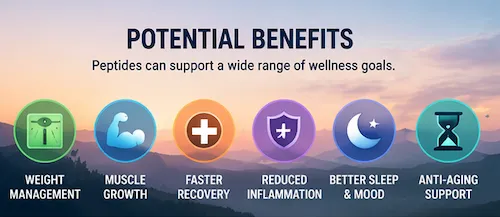
Struggle with weight management or metabolic dysfunction
Have chronic inflammation or slow recovery from injury
Experience fatigue, low energy, or decreased performance
Are looking for medically guided support for hormone or aging-related changes
The Bottom Line:
Peptides can be a useful tool—but they are not a shortcut or one-size-fits-all solution. The safest and most effective approach is one that is provider guided, evidence informed, and tailored to your individual goals and medical history.
At Access Medical, we focus on using therapies that are guided by clinical research, appropriate testing, and ongoing monitoring—so you can feel confident in your care.
