Sleep Apnea: More Than a Mask—It’s About Your Health
Sleep Apnea: Why the Right Treatment Matters
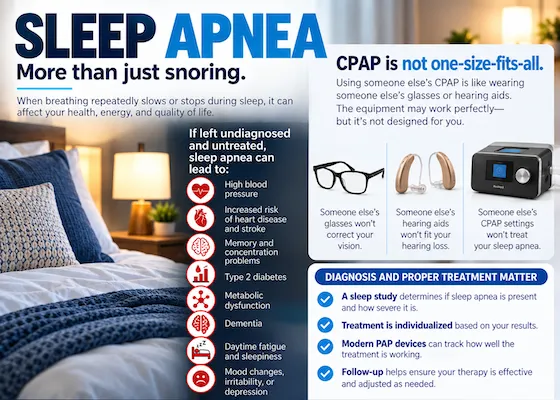
Sleep apnea is more than snoring or feeling tired the next day. When it is untreated or poorly treated, breathing can repeatedly slow or stop during sleep, causing drops in oxygen and repeated interruptions in normal sleep.
Over time, untreated obstructive sleep apnea can contribute to significant health problems, including:
High blood pressure
Fatty liver disease
Abnormal heart rhythms
Increased cardiovascular risk
Increased risk of stroke
Daytime fatigue and sleepiness
Morning headaches
Difficulty concentrating and memory problems
Mood changes, irritability, anxiety, or depression
Poor-quality, non-restorative sleep
Increased risk of accidents related to daytime sleepiness
Insulin resistance or Type 2 diabetes, or weight gain
Having a CPAP Isn't the Same as Having THE RIGHT CPAP Treatment
One common misconception is that if you have access to a CPAP machine, you can simply put it on and start using it.
But CPAP therapy is not one-size-fits-all.
Using someone else's CPAP can be a lot like wearing someone else's prescription glasses or hearing aids.
The glasses may be perfectly good—but if they were prescribed for someone else's vision, they may not correct yours. A hearing aid programmed for another person's hearing loss isn't automatically appropriate for your hearing loss either.
CPAP is similar.
The pressure needed to keep one person's airway open may be very different from the pressure another person needs. The mask style, fit, pressure settings, comfort features, humidification, and even the type of PAP therapy may need to be individualized.
A machine that is set incorrectly may leave apnea events inadequately treated or make therapy unnecessarily uncomfortable. A machine that is not set to your individual needs, may also cause new breathing or physical problems. This can create the impression that "CPAP doesn't work" when the real problem is that the treatment hasn't been properly matched to the patient.
Diagnosis Comes First
Before treating suspected sleep apnea, it is important to determine whether sleep apnea is actually present and, if so, what the cause is, and how severe it is.
A sleep study can provide information such as:
How frequently breathing disturbances occur
Whether oxygen levels drop during sleep
How severe the sleep apnea is
Whether events are primarily obstructive or central
Whether additional evaluation or a different type of therapy may be appropriate
Treatment can then be selected and adjusted based on the individual's results rather than simply guessing at settings.
Treatment Should Also Be Followed
Starting CPAP is only part of the process. Modern PAP devices can provide useful information about how well treatment is working, including residual breathing events, mask leakage, usage, and pressure requirements.
Follow-up allows us to ask an important question:
Is the treatment actually controlling the sleep apnea?
If someone continues to snore, wakes frequently, remains exhausted during the day, struggles with the mask, or has persistently elevated events despite using PAP therapy, the treatment may need to be reassessed.
Don't Ignore the Signs
Talk with your healthcare provider if you or your partner notice symptoms such as loud habitual snoring, witnessed pauses in breathing, gasping or choking during sleep, excessive daytime sleepiness, morning headaches, poor concentration, or waking repeatedly during the night.
Sleep apnea is treatable—but effective treatment starts with identifying the problem and choosing therapy appropriate for the individual.
Your CPAP should be fitted to YOUR sleep apnea—not someone else's.
